
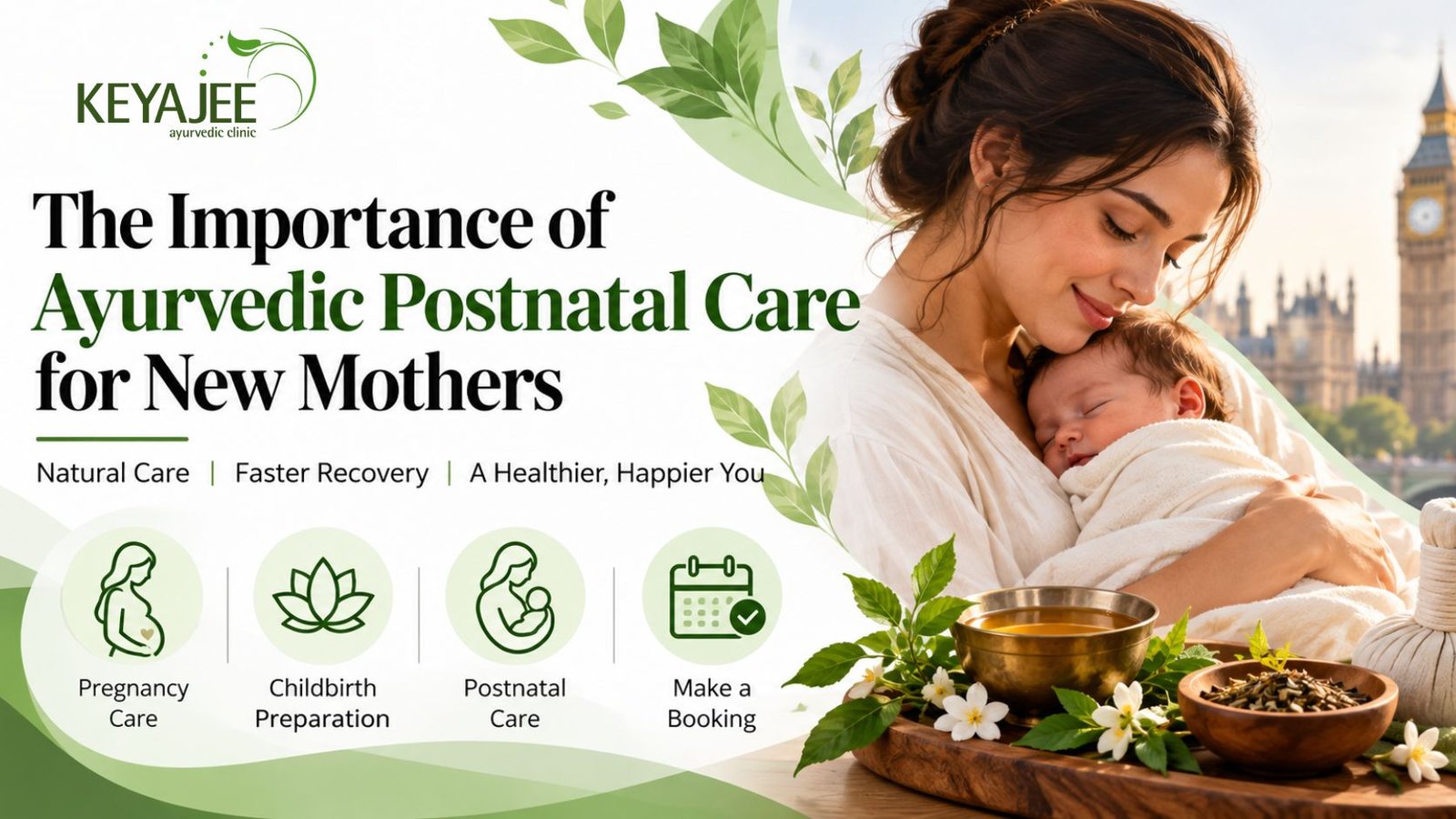
The weeks after birth are some of the most precious, and most demanding, of a woman’s life. So much attention goes into pregnancy and the birth itself that the mother’s own recovery is often left as an afterthought. Ayurvedic postnatal care turns that around. It treats the early weeks of motherhood as a sacred time for deep rest, nourishment and healing, and it is something best planned while you are still pregnant, through thoughtful Ayurvedic pregnancy care.
At Keyajee, our Ayurvedic clinic in London, Vaidya Seema Datta has supported mothers through pregnancy, birth and the “fourth trimester” for more than 25 years. As a Gentle Birth Method practitioner, doula and certified childbirth educator, Seema builds postnatal planning into our childbirth preparation programme, so that you come home from hospital with a plan, not a question mark.
In this guide, we explain why the postnatal period matters so much, what Ayurveda after childbirth involves, and how it works alongside your NHS care. If you would like to read about the traditional roots first, see our article on the postpartum period in Ayurveda, or book a free consultation to start planning your own recovery.
Why the Postnatal Period Matters So Much
The World Health Organization describes the first weeks after birth as a critical window for both mother and baby. Yet, according to the WHO, more than 3 in 10 women and babies worldwide do not receive postnatal care in the first days after birth, when most maternal and infant deaths occur. In 2022, the WHO published new guidance recommending at least three check-ups after the first 24 hours, in the first six weeks, including screening for postnatal depression and anxiety.
In the UK, you should be offered a postnatal check with your GP 6 to 8 weeks after birth. This covers your mental health, bleeding, periods, stitches if you had an episiotomy or caesarean, contraception and vitamin D advice if you are breastfeeding.
What Happens to Your Body After Birth
Your body goes through enormous change after birth. The womb contracts back to its normal size, which causes “afterpains” that usually last two to three days and can feel stronger during breastfeeding. Postnatal bleeding, called lochia, gradually becomes lighter and browner and should stop completely by the time your baby is 12 weeks old. Pelvic floor exercises help with recovery and bladder control.
Always call 999 if you have sudden, very heavy bleeding, a high temperature with pelvic pain or unpleasant-smelling discharge, difficulty breathing, or chest pain with a swollen leg. Ayurvedic care supports recovery; it never replaces urgent medical help.
Your Emotional Health Matters Too
Many women feel tearful, low or anxious in the first week after birth. These “baby blues” are so common they are considered normal, and they should pass within two weeks. Postnatal depression is different: it affects more than 1 in 10 women within a year of giving birth. If low mood lasts longer than two weeks or starts later, speak to your GP, midwife or health visitor.
If your birth was difficult, our article on Ayurvedic support for birth trauma recovery offers gentle guidance.
What Is Ayurvedic Postnatal Care? Understanding Sutika Paricharya
In Ayurveda, a new mother is called a Sutika, and the care she receives is called Sutika Paricharya. Classical texts describe a dedicated postnatal period, known as Sutika Kala, of around 45 to 60 days.
Ayurveda teaches that pregnancy and birth deplete the body’s tissues (Dhatukshaya) and leave Vata, the dosha of air and movement, highly aggravated. Birth creates space and emptiness in the body, and Vata rushes in to fill it. Left unchecked, this is believed to show up as exhaustion, anxiety, poor sleep, constipation, joint aches and low milk supply.
According to a 2026 review in the Journal of Ayurveda and Integrated Medical Sciences, the aims of Sutika Paricharya are to nourish the tissues, help the womb return to its normal size, support breastfeeding and prevent long-term health problems. Put simply, postnatal Ayurveda is about rebuilding strength so that you do not carry the depletion of birth into the months and years ahead.
The Pillars of Ayurveda After Childbirth
Sutika Paricharya rests on three foundations: Ahara (diet), Vihara (lifestyle) and Aushadha (herbal medicine). In practice, this looks like the following.
Warm, Nourishing Food to Rekindle Agni
After birth, Ayurveda considers your digestive fire, Agni, to be weak. Heavy, cold or raw foods are hard to digest, so postnatal meals are traditionally:
- Warm, soft and freshly cooked, such as soups, stews, porridge and kitchari
- Gently spiced with digestive spices such as ginger, cumin, fennel and turmeric
- Enriched with a little ghee to nourish the tissues
- Eaten at regular times, with warm drinks rather than iced ones
Turmeric has a special place in traditional postnatal kitchens, as explored in our article on turmeric for new mothers. For convenient nourishment in those busy early days, our postpartum energy balls are made with traditional ingredients.
Abhyanga: Daily Warm Oil Massage
Warm oil massage, or Abhyanga, is one of the most treasured parts of Ayurvedic care after delivery. It is traditionally used to calm Vata, ease aches, support circulation and help a new mother feel held and cared for.
Modern research supports the value of touch. In a randomised controlled trial of 60 postpartum women with poor sleep, a 20-minute back massage each evening for five days significantly improved sleep quality compared with women who did not receive massage. If you had a caesarean or stitches, your practitioner will adapt the massage and avoid healing areas.
Rest, Warmth and Belly Binding
Ayurveda asks new mothers to stay warm, avoid cold draughts, limit visitors and rest as much as possible during Sutika Kala. Traditional care also includes Udara Veshtana, gently wrapping the abdomen with a cotton cloth, which is believed to support the core and help the belly settle. Always check with your midwife or GP before binding after a caesarean.
Our guide to Ayurvedic postpartum healing after birth covers these traditions in more detail.
Herbs and Support for Breastfeeding
Ayurveda uses specific herbs and foods to support energy, digestion and breast milk. Because you are breastfeeding, herbs should only ever be taken under the guidance of a qualified practitioner, and you should always tell your midwife or GP what you are taking. Curious about the Ayurvedic view of milk quality? Read about our Ayurvedic breast milk test.
Calming the Mind
Postnatal Ayurveda treats emotional wellbeing as seriously as physical healing. Gentle breathing, meditation, sleep support and simply being cared for all help to settle an anxious, overstretched nervous system. Our article on Ayurvedic postpartum recovery for fatigue and anxiety shares practical ideas.
Postnatal Ayurveda and Modern Care: Working Together
Ayurvedic postnatal care is not an alternative to your NHS care. It fills the gaps between appointments, focusing on the day-to-day recovery that busy health services rarely have time for.
| Your NHS postnatal care | Ayurvedic postnatal care |
|---|---|
| Midwife and health visitor visits | Daily routine for rest and recovery |
| 6–8 week GP check | Nourishing, easy-to-digest meal plans |
| Checks on stitches, bleeding and blood pressure | Warm oil massage and gentle bodywork |
| Mental health screening | Emotional support and calming practices |
| Contraception and vitamin D advice | Practitioner-guided herbs for energy and lactation |
Used together, they offer the best of both worlds: medical safety and whole-person nurturing.
Ayurvedic Care After Delivery at Keyajee
Every mother’s birth and recovery is different, so every Keyajee postnatal plan is personalised to your constitution, the type of birth you had and how you are feeling. Support may include:
- Healing foods and a postnatal meal plan
- Herbal support for lactation and energy
- Gentle massage and bodywork
- Rebuilding physical strength step by step
- Emotional support through the mental health transitions of new motherhood
One Keyajee mother, Mehek, described how her postpartum treatments with Seema began “the day after I came home from hospital”, with massages to help her uterus shrink back and reduce bloating, herbs and teas timed to different stages of the postnatal period, and a cotton belly wrap. You can read more mothers’ experiences in our positive birth and postpartum stories.
Online consultations run on Mondays, Tuesdays, Wednesdays and Fridays, which is ideal when leaving the house with a newborn feels impossible. In-person appointments take place on Saturdays at our Ayurvedic clinic in Marylebone, near Baker Street.
Planning Your Postnatal Care Before Birth
The best time to plan postpartum Ayurveda is during pregnancy. Through our pregnancy care programme, Seema shares postnatal diet and massage techniques to prepare your body for breastfeeding, while our birth preparation sessions include a full postpartum recovery plan. Packing for hospital? Our Ayurvedic hospital bag essentials list includes items that support those first few days. You might also like our Ayurvedic postpartum guide to keep on hand at home.
Looking Ahead: Your Next Chapter
Ayurveda sees a well-supported postnatal period as the foundation for a mother’s long-term health. When you feel ready to think about another baby, our Ayurvedic fertility programme offers a structured three-month plan to rebuild your reserves and prepare your body for conception, whether naturally or alongside IVF.
Give Yourself the Postnatal Care for Mothers You Deserve
Caring for a newborn is a full-time job, and it is all too easy to put your own recovery last. Yet a well-rested, well-nourished mother is better able to care for her baby and herself. Alongside your Ayurvedic plan, make sure you attend your NHS 6-week postnatal check so your GP can look after your physical and mental health.
The importance of the first weeks after birth is recognised worldwide. The WHO’s guidance on quality care in the critical first weeks after childbirth calls for support that looks after both the physical and emotional wellbeing of mothers.
To explore the traditional science behind this approach, this review of Sutika Paricharya, the Ayurvedic science of postpartum care, is a helpful read. When you are ready to plan your own recovery, book your free consultation with Vaidya Seema Datta or contact our team. You have nurtured your baby for nine months. Now let us help nurture you.
Frequently Asked Questions
1. What is Ayurvedic postnatal care?
Ayurvedic postnatal care, known as Sutika Paricharya, is a traditional regimen of nourishing food, warm oil massage, rest, herbs and emotional support that helps a new mother recover her strength after birth.
2. How long does the Ayurvedic postnatal period last?
Classical Ayurvedic texts describe the postnatal period, or Sutika Kala, as lasting around 45 to 60 days, although your recovery plan can continue for longer if needed.
3. When can I start Ayurvedic care after delivery?
Gentle measures such as warm food and rest can begin straight away. Massage and herbs should start only under a practitioner’s guidance and once your midwife is happy with your recovery, especially after a caesarean.
4. Is postnatal Ayurveda safe while breastfeeding?
Diet, routine and massage are generally gentle, but herbs should only be taken with guidance from a qualified practitioner. Always tell your midwife or GP about anything you take while breastfeeding.
5. Can Ayurveda help with the baby blues or postnatal depression?
Ayurvedic practices can support rest, calm and emotional wellbeing. However, if low mood lasts longer than two weeks, or you have frightening thoughts, please contact your GP, midwife or health visitor straight away.
6. Does Ayurveda help after a caesarean birth?
Yes, with adaptations. Your practitioner will avoid the wound area, adjust massage and belly binding, and focus on nourishment and rest while you heal. Follow your medical team’s advice first.
7. Can I have an Ayurvedic postnatal consultation online?
Yes. Keyajee offers online consultations on Mondays, Tuesdays, Wednesdays and Fridays across the UK and internationally, with in-person appointments on Saturdays near Baker Street. Call +44 7588 891 824 to find out more.


