
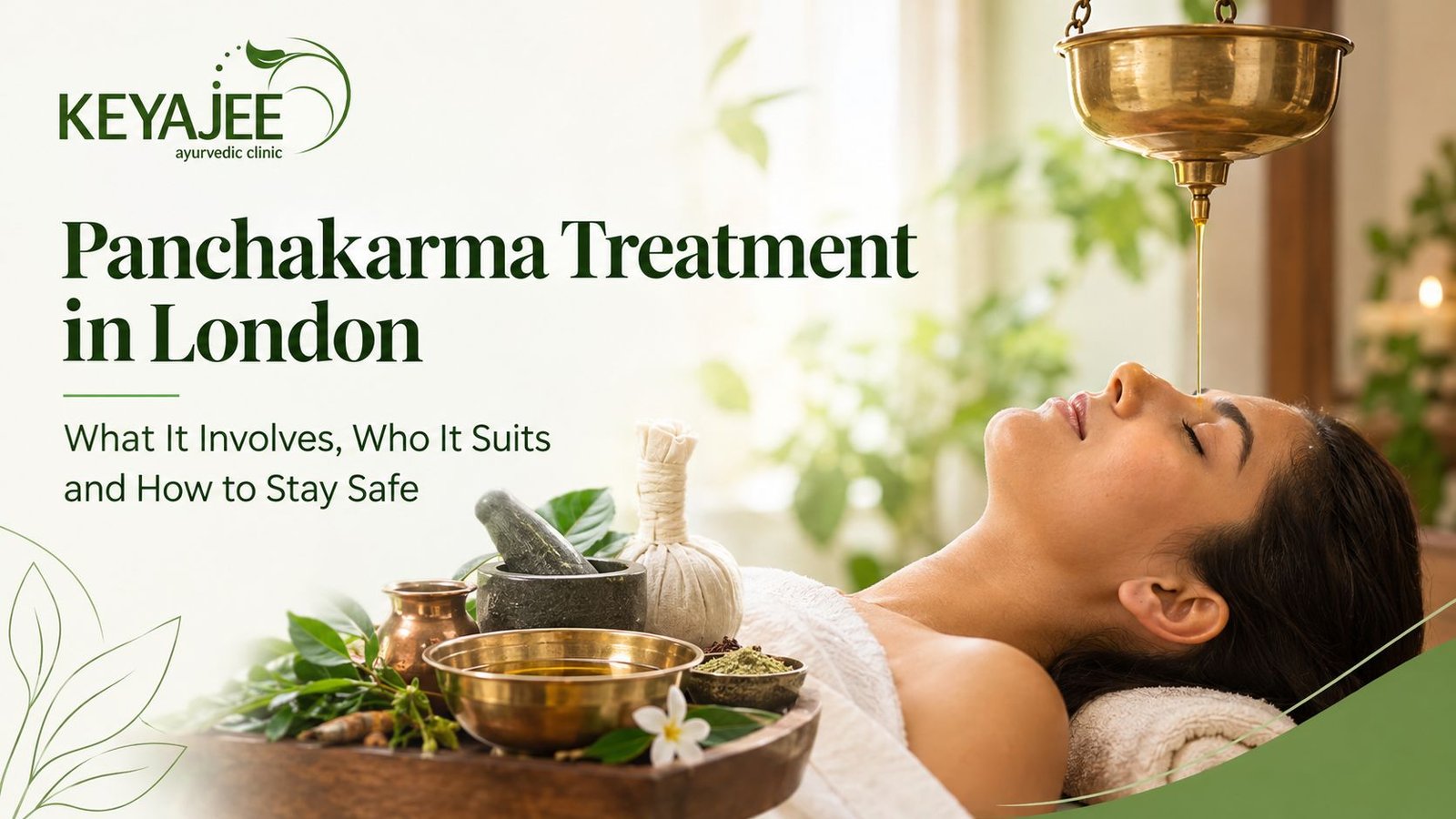
Panchakarma treatment in London is a personalised Ayurvedic programme of preparation, cleansing and rebuilding, based on the classical “five actions” of Ayurveda. In practice, it usually combines warm oil massage, herbal steam, a simple diet and, only where suitable, supervised elimination therapies, followed by a gradual return to normal eating. Done properly, it is an individual, supervised process rather than a quick spa detox, and it is not right for everyone.
At Keyajee Ayurvedic Clinic, personalised Panchakarma programmes are guided by Vaidya Seema Datta, who brings more than 25 years of clinical experience. Programmes can be followed in person at the clinic near Baker Street or through a supported online plan. Cleansing also plays a part in our wider women’s health care, from the digestive reset that opens our three-month Ayurvedic fertility care programme to personalised menopause support for women approaching midlife.
This guide explains what the five therapies are, what happens at each stage, what the research does and does not show, who should avoid Panchakarma, and the questions to ask before you choose a clinic. If you would prefer a gentler, food-based way to begin, our guided Autumn Digestive Reset is a live online programme with personalised diet guidance and simple self-care practices.
Quick answer: Panchakarma is a traditional Ayurvedic programme with three stages: preparation (oil massage and herbal steam), the main cleansing therapies (such as medicated purgation, enemas or nasal treatments) and a rebuilding phase with a gradual diet. Evidence for its health claims is limited, and some therapies are unsuitable in pregnancy or with certain medical conditions, so it should only be done with a qualified practitioner after a full health assessment.
What Is Panchakarma?
Panchakarma (from the Sanskrit pancha, five, and karma, action) is the main purification therapy in Ayurveda. According to Ayurvedic teaching, poor digestion (weak Agni), stress, diet and seasonal change allow undigested residue, called ama, to build up and disturb the three doshas: Vata, Pitta and Kapha. Panchakarma is designed to loosen this residue, remove it through the body’s natural routes of elimination and then rebuild strength. Seema explains the tradition in more depth in our article on what Panchakarma is and why many people choose it in January.
These are traditional Ayurvedic concepts rather than established medical findings, but they explain why a Panchakarma programme looks the way it does.
The Five Panchakarma Therapies at a Glance
Classical texts list the five actions slightly differently. One tradition counts two kinds of enema (decoction and oil) separately, while the Sushruta tradition includes bloodletting. The table below shows the five most often described today.
| Therapy | What it involves | Traditional aim | Practical note |
| Vamana | Therapeutic vomiting, induced with herbal preparations | Clearing excess Kapha | Needs close supervision; classical guidance excludes pregnancy, heart disease, high blood pressure, children under 12 and adults over 60 |
| Virechana | Medicated purgation (a controlled herbal laxative) | Clearing excess Pitta | Causes repeated loose stools, so fluids and monitoring matter |
| Basti | Medicated enemas of herbal decoction or oil | Settling Vata | Often described as the most important therapy for Vata conditions |
| Nasya | Medicated oil or drops placed in the nose | Clearing the head and neck | Gentle forms can be learned for home use |
| Raktamokshana | Bloodletting, traditionally sometimes with leeches | Clearing the blood | Used only where specifically indicated |
Not every programme uses all five. A good practitioner chooses only what suits your constitution, health and current condition, and many people receive only one main therapy, or only the gentler preparatory treatments.
What Happens During Panchakarma Treatment?
A Panchakarma programme follows three stages.
- Preparation (Purvakarma). Over several days, medicated oils are applied in massage (Snehana) and sometimes taken internally, followed by herbal steam (Swedana). Ayurveda teaches that this softens and loosens ama so it can be removed. You eat simple, warm, easily digested food during this stage.
- Main therapies (Pradhana Karma). The selected elimination therapy is given under supervision. This is the most demanding part of the programme, and you should plan to rest rather than work as normal.
- Rebuilding (Paschat Karma). Your diet is rebuilt gradually, starting with thin, light foods and slowly returning to a full diet. This step-by-step diet is called Samsarjana Krama. Rejuvenating herbs (Rasayana), gentle massage, yoga and daily routine advice help you settle.
How Long Does Panchakarma Take?
There is no single standard length. Research programmes have ranged from six days to two weeks, and in practice your length depends on your health, goals and which therapies are chosen. Remember to allow time for the rebuilding stage, which is when many of the traditional benefits are thought to settle.
Panchakarma in a London Setting
Classical Panchakarma was often carried out in residential settings, which is not practical for most busy Londoners. A modern programme may combine clinic treatments with simple practices you continue at home, such as warm oil self-massage and gentle Nasya, alongside diet and routine changes. Online support can work well for the preparation and rebuilding stages, while hands-on therapies need to be done in person.
What Are the Potential Benefits of Panchakarma?
People usually come to Panchakarma hoping to improve digestion, energy, sleep, skin or a sense of calm, or simply to reset after a stressful period. Keyajee clients often describe feeling lighter and more energetic afterwards. These are real experiences, but it is important to be honest about what the science shows.
Research on Panchakarma is still at an early stage. In one controlled study of 119 healthy adults, 65 took part in a six-day Panchakarma-based programme of herbs, a vegetarian diet, meditation, yoga and massage. This Scientific Reports study of a six-day Panchakarma programme found measurable changes in blood metabolites compared with a control group. However, the authors themselves noted that very few controlled studies of Panchakarma exist, the study measured blood markers rather than health outcomes, and the researchers suggested the changes were likely to be driven mainly by the vegetarian diet.
The wider idea of “detoxing” also needs care. The US National Center for Complementary and Integrative Health has found no compelling research that detox programmes remove toxins from the body, and notes that many studies of detox regimens have been small or poorly designed.
So what can you reasonably expect? The parts of Panchakarma that most people notice are rest, a simple and regular diet, warm oil massage and time away from daily pressures. These are worthwhile in their own right. Claims that Panchakarma cures disease, slows ageing or removes specific toxins are not supported by good evidence. If you are wondering whether it suits you, a full consultation with a qualified practitioner is the best place to start.
Is Panchakarma Safe? Side Effects and Who Should Avoid It
Panchakarma is generally well tolerated when it is carefully selected and supervised, but the elimination therapies are real physical interventions, not pampering treatments. Common short-term effects include tiredness, nausea, loose stools and feeling low in energy for a few days. Laxative-style therapies can cause dehydration, and very restricted diets or long periods without food can upset the body’s salt balance and cause headaches, weakness or fainting.
Who Should Speak to Their GP First, or Avoid Panchakarma
Speak to your GP before starting, and tell your Ayurvedic practitioner, if any of the following apply:
- You are pregnant, could be pregnant or are breastfeeding. Classical guidance excludes pregnancy from the main elimination therapies.
- You have heart disease, high blood pressure or kidney disease.
- You have diabetes, as changes to your diet can affect your blood sugar and medication.
- You have a bowel condition, have had bowel surgery or have severe haemorrhoids, which make enema and purgation therapies riskier.
- You have, or have had, an eating disorder, because restricted eating plans can be unhelpful.
- You are older, frail or recovering from illness. Classical texts advise against Vamana for adults over 60 and children under 12.
- You take regular medication. Never stop or change prescribed medicine without your doctor.
Herbs and Product Safety
Ayurvedic preparations are not all equally safe. According to the US National Center for Complementary and Integrative Health, some Ayurvedic preparations may contain toxic amounts of lead, mercury or arsenic. In a 2015 survey of people using Ayurvedic preparations, 40% had raised blood lead levels. The UK medicines regulator, the MHRA, has issued similar warnings about unlicensed Ayurvedic remedies. Only take herbs prescribed by your practitioner, ask where they come from, and never buy unlabelled remedies online. Our guide to Ayurvedic medicine and herb safety explains what to check.
When to Stop and Get Medical Help
Stop your programme and contact NHS 111 or your GP if you feel faint or dizzy, cannot keep fluids down, have diarrhoea that will not settle, or notice blood in your stools. Call 999 for chest pain, severe breathlessness or collapse. A responsible practitioner will always support you in seeking medical care.
Panchakarma for Women’s Health: Fertility and Menopause
Keyajee specialises in women’s health, and many women consider Panchakarma at times of transition. In Ayurveda, Panchakarma is traditionally used before trying to conceive, so that both partners begin from a place of balance. At Keyajee, the fertility programme begins with a month focused on cleansing and digestive health before moving on to rejuvenation.
For women approaching midlife, Ayurveda sees menopause as a natural shift towards Vata, and some choose gentle Panchakarma-based care to support sleep, digestion and calm. Keyajee’s menopause care treats this as a natural transition and does not rely on hormone replacement, although it can sit alongside HRT if you and your doctor choose it.
Evidence in both areas is limited, so Panchakarma should sit alongside, never instead of, fertility investigations, IVF or menopause care from your GP. The main elimination therapies are not given during pregnancy, and any postnatal treatment should wait until your midwife and practitioner agree you have recovered.
How to Choose a Panchakarma Clinic in London
Ayurveda is not statutorily regulated in the UK, so it is up to you to check who is treating you. Use these questions:
- Who will treat me, and what is their training? Ask where they qualified, how many years they have practised and whether they belong to a voluntary register such as the Ayurvedic Professionals Association.
- Will I have a full assessment first? Expect questions about your medical history, medicines, digestion, sleep and goals, not just a menu of treatments.
- Which therapies do you recommend, and why? A good practitioner will also tell you which therapies are not suitable for you.
- How long is the programme, and what does it cost? You should receive a clear plan before you commit.
- Where do your herbs come from? Look for traceable, individually prescribed products.
- What happens afterwards? Aftercare and diet guidance are part of the treatment, not an extra.
- Will you work alongside my GP? The answer should always be yes.
| Green flags | Red flags |
| Full consultation before any treatment | The same package for everyone |
| Clear explanation of risks and side effects | Promises to cure illness or “remove all toxins” |
| Tells you if Panchakarma is not suitable | Pressure to book immediately |
| Encourages you to keep seeing your GP | Advice to stop prescribed medication |
| Traceable, prescribed herbs | Unlabelled remedies or online “detox kits” |
| A planned rebuilding diet and follow-up | Treatment that ends abruptly with no aftercare |
What to Expect from Panchakarma at Keyajee
At Keyajee, every programme begins with a consultation with Vaidya Seema Datta. Using traditional pulse, tongue and dosha assessment alongside a detailed conversation about your health, she looks at both your natural constitution (Prakriti) and your current imbalances (Vikriti). If Panchakarma is not right for you at this time, she will tell you, and may suggest a gentler approach instead.
Your programme follows the three stages described above: preparatory oil therapies and herbal steam, the selected main therapies, and a rebuilding phase with a gradual diet, Rasayana herbs, gentle massage, yoga and lifestyle guidance. Seema also teaches simple practices to continue at home, such as self-massage and Nasya, so the benefits of your routine can carry on after the programme ends.
In-person appointments take place on Saturdays at the clinic near Baker Street in Marylebone, with online consultations on Mondays, Tuesdays, Wednesdays and Fridays for clients across the UK and abroad.
Is Panchakarma Treatment in London Right for You?
Panchakarma can be a deeply restorative experience when it is personalised, supervised and approached with realistic expectations. It is not a cure, and it is not for everyone, but for many people the combination of rest, simple food, warm oil therapies and a careful rebuilding diet offers a meaningful reset.
The most important step is the first one: an honest assessment of whether Panchakarma suits your health right now. If you would like to explore traditional Ayurvedic cleansing with an experienced practitioner, you can book a free consultation with Vaidya Seema Datta to talk through your health, your goals and whether Panchakarma, or a gentler alternative, is the right next step.
Frequently Asked Questions
1. What is Panchakarma treatment?
Panchakarma is Ayurveda’s classical purification programme. It has three stages: preparation with oil massage and herbal steam, a main therapy such as medicated purgation, enemas or nasal treatment, and a rebuilding phase with a gradual diet. It is personalised to your constitution and health, and should only be carried out by a qualified Ayurvedic practitioner after a full assessment.
2. How much does Panchakarma treatment cost in London?
Costs vary widely depending on the length of the programme, the therapies included and whether treatment is in person, online or residential. Keyajee does not list Panchakarma prices online because each programme is tailored, so ask for a written plan and costs at your consultation. Be cautious of very cheap “Panchakarma” packages that offer massage alone without assessment or aftercare.
3. How long does Panchakarma take?
There is no fixed length. Research programmes have lasted from six days to two weeks, and real-world programmes depend on your health, goals and which therapies are chosen. Allow time for the preparation stage beforehand and the rebuilding diet afterwards, and plan to keep your schedule light during the main therapies.
4. Is Panchakarma the same as a detox?
Not quite. Panchakarma is often described as an Ayurvedic detox, but it is a structured medical tradition with preparation, specific therapies and a planned recovery, rather than a juice fast or cleanse. The idea of removing toxins comes from Ayurvedic teaching; modern research has not shown that detox programmes remove toxins from the body.
5. What are the side effects of Panchakarma?
Common effects include tiredness, nausea, loose stools and low energy for a few days, especially during elimination therapies. Dehydration and salt imbalance are possible if purgation or restricted eating is not well supervised. Tell your practitioner about any health conditions and medicines, and seek medical help if you feel faint, cannot keep fluids down or have persistent diarrhoea.
6. Can I do Panchakarma online or at home?
Partly. Online support works well for the preparation and rebuilding stages, including diet, routine, self-massage and gentle practices such as Nasya. Hands-on therapies and the main elimination treatments need in-person supervision. Keyajee offers online consultations across the UK and internationally, with in-person treatment on Saturdays near Baker Street.
7. Can I have Panchakarma while pregnant or breastfeeding?
The main elimination therapies are not given during pregnancy, according to classical Ayurvedic guidance. Gentle, practitioner-guided care such as diet and routine advice may still be appropriate, but always check with your midwife. After birth, wait until your midwife and practitioner agree you have recovered, and take herbs while breastfeeding only under qualified guidance.


