
Living with endometriosis can feel like a long, lonely battle. Painful periods, pelvic discomfort, bloating, exhaustion and quiet worries about fertility often go unexplained for years. If you are exploring Ashokarishta for endometriosis, you are among a growing number of women looking for gentle, time-tested support that works alongside modern care. At Keyajee, our Ayurvedic treatment for endometriosis in London is personalised to your constitution, your cycle and your symptoms, not to a diagnosis in isolation.
Keyajee was founded by Vaidya Seema Datta, who brings over 25 years of experience in women’s health. Her approach blends classical Ayurveda with evidence-informed modern care, supporting women through Ayurvedic fertility care, pregnancy care and the midlife shift with personalised menopause support. If you’d like personal guidance, you can book a free consultation online or in person.
In this guide, you’ll learn what Ashokarishta is, why it has been used for centuries for women’s health, what the research shows and how to use it safely. For a deeper look at related symptoms, see our articles on endometriosis-related bloating and digestive issues around your period.
Quick answer: Ashokarishta is a classical fermented Ayurvedic tonic made from the bark of the Ashoka tree and 13 other herbs. Traditionally used for heavy, painful or irregular periods, it is prescribed in Ayurveda as part of a wider plan for women with endometriosis to help ease menstrual pain, support uterine health and settle the cycle. It is not a cure, contains natural alcohol, and should only be taken under a qualified practitioner’s guidance.
Understanding Endometriosis: Why Women Are Seeking Natural Support
Endometriosis is a long-term condition where tissue similar to the womb lining grows elsewhere in the body, causing inflammation, pain and sometimes fertility difficulty. According to Endometriosis UK, around 1.5 million women in the UK are living with the condition, and the average time to diagnosis has risen to 9 years and 4 months. It affects an estimated 1 in 10 women of reproductive age, and up to 30–50% of women struggling to conceive may also have endometriosis.
The NHS states there is no cure for endometriosis, but treatment including pain relief, hormone therapy and surgery can help manage symptoms. Many women find this medical pathway helpful but incomplete, which is why they look for a whole-body approach that also addresses digestion, stress and daily routine. For a wider view, see our article on period pain explained through Ayurveda.
What Is Ashokarishta?
Ashokarishta is a traditional Ayurvedic tonic described in the classical text Bhaishajya Ratnavali, in the chapter devoted to female disorders (Stree Rogadhikara). The main ingredient is the bark of the Ashoka tree (Saraca asoca), long valued as a uterine tonic. Classified as an Arishta, it is a self-fermented preparation containing 5–10% naturally generated alcohol, which acts as a carrier for the herbs’ active properties and gives it a sweet, astringent taste.
Key Ingredients Inside the Bottle
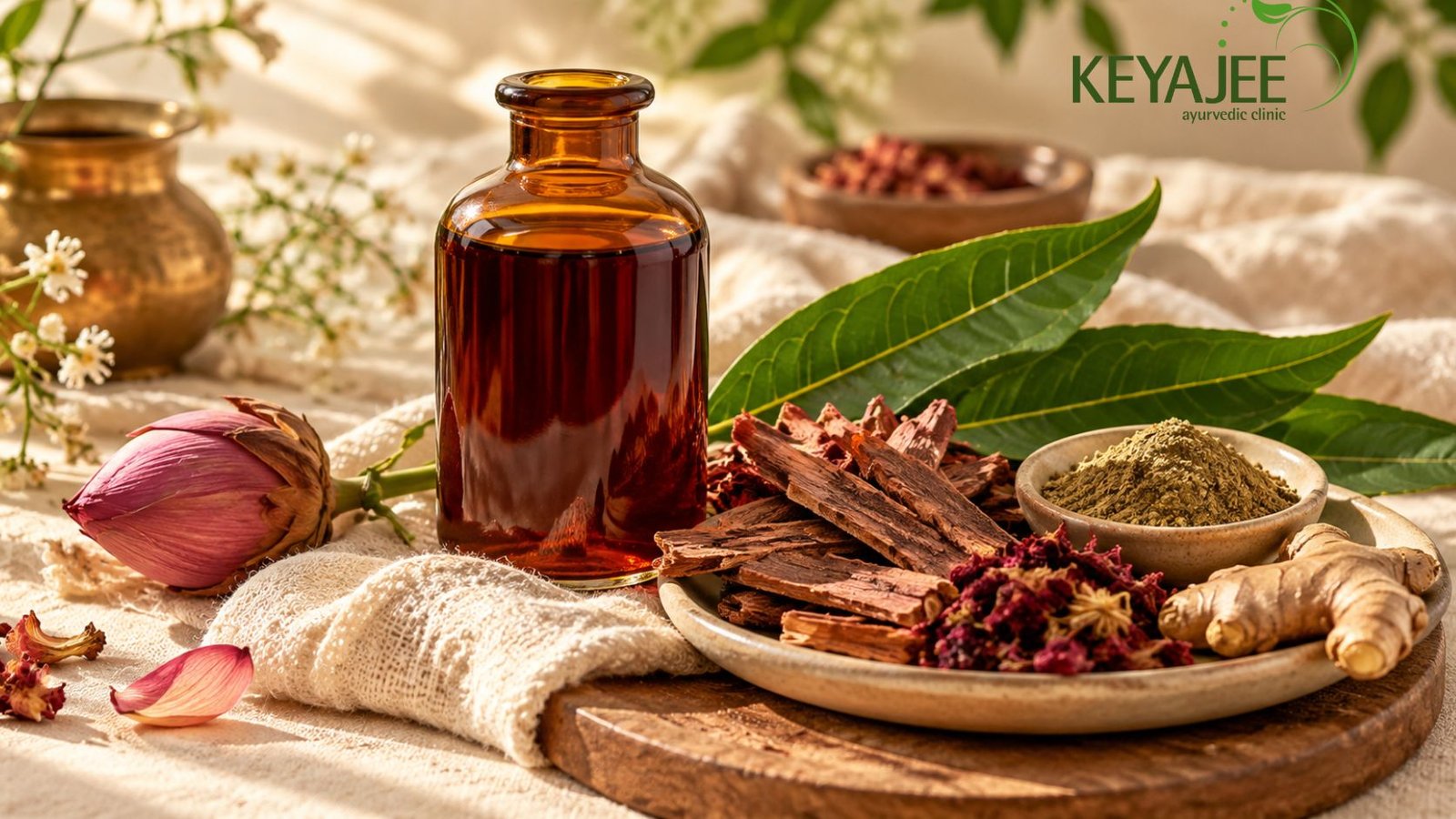
The classical formula lists 14 herbs in total, including:
- Ashoka bark (Saraca asoca) — traditional uterine tonic
- Dhataki flowers (Woodfordia fruticosa) — supports fermentation and astringency
- Haritaki, Amalaki and Bibhitaki (Triphala) — gentle digestive support
- Shunthi (ginger) — warming and digestive
- Musta (Cyperus rotundus) — traditionally used for cycle balance
- Vasa, Daruharidra, Chandana and Neelotpala — soothing and cooling herbs
Blended with jaggery and water, the mix is fermented in traditional vessels to produce the finished tonic.
Ashokarishta for Endometriosis: How It May Help
In Ayurveda, endometriosis is seen as a complex imbalance often involving aggravated Vata (movement and pain), Pitta (heat and inflammation) and weakened digestive fire (Agni), which allows undigested residue (Ama) to block the reproductive channels. Ashokarishta is traditionally used to:
- Soothe the uterus and support a more regular cycle
- Reduce excessive bleeding and spotting
- Ease painful periods through its traditional antispasmodic action
- Settle premenstrual mood changes
- Nourish the reproductive tissue (Artava Dhatu)
An Ayurvedic View of Your Symptoms
| Dosha pattern | Common endometriosis signs | Ayurvedic focus |
|---|---|---|
| Vata | Sharp or cramping pain, irregular cycles, anxiety, bloating | Grounding, warm oil massage, Ashokarishta with warming herbs |
| Pitta | Heavy, hot or inflamed periods, irritability, acne | Cooling diet, Ashokarishta with Shatavari, stress support |
| Kapha | Dull aches, heavy sluggish cycles, water retention, weight gain | Lighter diet, movement, digestive support |
Because endometriosis sits alongside wider hormonal shifts, our guide on Ayurvedic support for hormonal imbalance in London explains how herbs, diet and routine work together.
Ashokarishta Benefits for Women’s Health
Beyond endometriosis, Ashokarishta benefits for women’s health are wide-ranging in traditional practice. Ayurvedic practitioners may use it as part of plans for:
- Heavy or irregular menstrual bleeding
- Painful periods and premenstrual discomfort
- Perimenopausal cycle and mood changes
- Supportive care alongside fibroids or ovarian cysts
- General uterine toning and reproductive wellbeing
It is one piece of a larger strategy that may also include diet, Ayurvedic daily routine, gentle therapies and sometimes Panchakarma cleansing. Many women begin their journey with our Autumn Digestive Reset, a guided seasonal programme that supports digestion and hormone health.
What the Research Says So Far
Modern research on Ashokarishta is still emerging but encouraging. A 2018 study in the Journal of Traditional and Complementary Medicine found that Ashokarishta inhibited estrogen-induced endometrial thickening in female rats, offering scientific support for its traditional gynaecological use. This is particularly relevant to endometriosis, which is driven in part by oestrogen.
A randomised controlled trial protocol published in JMIR Research Protocols (2025) is now evaluating Ashokarishta for menorrhagia (Raktapradara) in India. Earlier work by the Central Council for Research in Ayurvedic Sciences (CCRAS) evaluated Ashokarishta alongside Ashwagandha and Praval Pishti in 52 women with menopausal syndrome, with 51 completing the trial. A 2025 case report in the Journal of Clinical and Diagnostic Research also described Ashokarishta as part of a 90-day polyherbal protocol for endometrial polyp and menorrhagia.
These findings are promising, but larger, high-quality trials specifically for endometriosis are still needed, which is why Ayurvedic care should always complement, not replace, your medical treatment.
A Simple Daily Routine to Support Your Treatment
Herbs work best when the body around them is supported. Alongside Ashokarishta prescribed by your practitioner, try these gentle daily habits:
- Start with warm water instead of cold drinks first thing in the morning.
- Eat warm, freshly cooked meals with gentle spices like cumin, fennel, ginger and turmeric.
- Make lunch your largest meal, when Ayurveda considers digestion strongest.
- Rest more around your period rather than pushing through.
- Practise warm oil self-massage (Abhyanga) a few times a week to calm Vata.
- Wind down before 10pm and keep screens out of the bedroom.
- Move gently every day — walking, yoga or stretching, especially before your cycle.
For more ideas on cycle-friendly living, see our Ayurvedic menstruation wellness guide.
Safe Use, Dosage and Who Should Avoid Ashokarishta
Classical Ayurveda recommends a typical adult dose of 15–30 ml mixed with an equal quantity of warm water, taken after meals, usually twice a day, under a practitioner’s prescription. Dose and duration should always be personalised.
Who should take extra care or avoid Ashokarishta:
- Pregnant or breastfeeding women — contains natural alcohol
- Women with diabetes — jaggery base affects blood sugar
- Anyone with liver conditions or an alcohol concern
- Women on hormonal medication or blood thinners — always discuss with your GP
The MHRA has warned that some unlicensed Ayurvedic remedies have been found to contain mercury, lead and arsenic. Never buy from unknown online sellers. Our Ayurvedic medicine and herb safety guide explains what to check on labels, how to verify sourcing and when to pause a herb.
Ayurvedic Treatment for Endometriosis at Keyajee London
Every woman’s experience of endometriosis is different, so Keyajee never offers a one-size-fits-all plan. Your care begins with a detailed consultation including pulse, tongue and dosha assessment, as described in our guide to your first Ayurvedic consultation. Your plan may include personalised herbal support (which could include Ashokarishta), a dosha-based diet, daily routine guidance, stress and sleep support, and gentle therapies.
Online consultations run on Mondays, Tuesdays, Wednesdays and Fridays, with in-person appointments on Saturdays at our clinic near Baker Street. If you are also planning for motherhood, Seema continues to support women through our childbirth preparation programme.
Take the Next Step Towards Natural Relief
Endometriosis is more than painful periods, and you deserve care that listens to the whole picture. The NHS guide to endometriosis treatment is a useful starting point for understanding your medical options and when to see your GP.
For broader support, a helpline and community, Endometriosis UK offers advocacy and resources for the 1.5 million women living with the condition in the UK.
If you’d like to read the research for yourself, this protocol for a randomised trial of Ashokarishta in menorrhagia gives an honest picture of the evidence base. When you’re ready, contact our team or book your free consultation with Vaidya Seema Datta. Your journey towards balance begins with one gentle step.
Frequently Asked Questions
1. Can Ashokarishta cure endometriosis?
No. The NHS states endometriosis has no cure. Ashokarishta may support symptom management, especially pain and heavy bleeding, as part of a wider Ayurvedic plan guided by a qualified practitioner alongside your medical care.
2. How long does Ashokarishta take to work?
Many women notice gradual change over 2–3 menstrual cycles, but response varies. Your practitioner will review progress and adjust your plan accordingly.
3. Is Ashokarishta safe to take long term?
When prescribed and monitored by a qualified Ayurvedic practitioner, Ashokarishta is generally well tolerated. Long-term use should always be reviewed periodically with a break if advised.
4. Can I take Ashokarishta with hormone treatment or the pill?
Possibly, but only under combined guidance from your GP and your Ayurvedic practitioner. Always disclose everything you take.
5. Does Ashokarishta contain alcohol?
Yes. As a traditional Arishta, it contains 5–10% self-generated alcohol from fermentation, which is why it is not suitable during pregnancy or for anyone avoiding alcohol.
6. Can Ashokarishta help with fertility?
It is traditionally used to tone the uterus and settle the cycle, which may indirectly support fertility. For a full plan, see our Ayurvedic fertility care programme.
7. Where can I get an Ayurveda consultation for women’s health in London?
At Keyajee, you can book a free consultation with Vaidya Seema Datta online or in person near Baker Street. We also share what to look for in the best Ayurvedic clinic in London.


