

As the days shorten and the first cool winds arrive, many people notice their digestion quietly misbehaving: bloating after meals, trapped gas, constipation, or a heavy sluggishness that simply wasn’t there in summer. You are not imagining it. Changing weather and digestion are deeply connected, and Ayurveda has understood why for over 5,000 years. A well-timed Ayurvedic digestive reset can rekindle your digestive fire, clear that sluggishness, and help your gut adapt gracefully to the season ahead.
Why Changing Weather Affects Digestion: The Science
Modern research increasingly backs this seasonal view. In a landmark survey of people with irritable bowel syndrome, gastroenterologist Nicholas Talley and colleagues found that sufferers were significantly more likely to report seasonal changes in abdominal pain and bowel habits PubMed. A 2026 population study went further, showing that IBS incidence rose seasonally and peaked in autumn and summer Frontiers in Public Health. Even the gut’s bacterial inhabitants follow the calendar – a year-long study of human stool samples found microbiome diversity genuinely varied between summer and winter PLOS ONE. No wonder natural remedies for digestive issues – and a structured Ayurvedic digestive reset become so popular the moment the leaves turn.
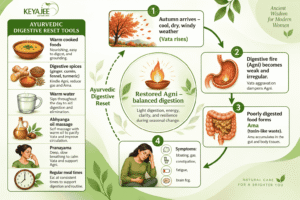
Ayurveda formalised this rhythm centuries ago as Ritucharya – the discipline of aligning diet and lifestyle with each season of NCBI PMC. When summer gives way to autumn’s cool, dry, windy days, Vata dosha builds and the digestive fire (Agni) grows weak and irregular. Food becomes only half-digested, leaving behind Ama a sticky, toxic residue behind bloating, fatigue and brain fog. That is exactly why an Ayurvedic digestive reset this autumn works so well: it removes the waste, re-stokes the flame, and restores the regular, comfortable digestion your body is craving as the season changes.
Why Changing Weather Affects Digestion: The Science
The link between weather changes and gut health is not folklore. Talley’s 1995 study, still cited today, found that people with IBS reported seasonal variation in abdominal pain and disturbed bowel movements significantly more often than those with minor bowel symptoms. Fast-forward to 2026, and a study in Frontiers in Public Health tracking IBS incidence found clear seasonal peaks in autumn and summer, suggesting that shifts in temperature, humidity, diet and daylight all influence how irritable the gut becomes.
Cold weather also changes behaviour: we move less, sleep differently and reach for heavier comfort foods, all of which slow gut transit and dull digestion. Meanwhile, the microbiome research from PLOS ONE showed our inner ecosystem is not static – the balance of bacterial species changes across the year. The takeaway is simple: gut health is seasonal, and your digestion deserves a seasonal strategy.
Seasonal Changes and Gut Health: The Ayurvedic View
In Ayurveda, digestion is the foundation of health: you are what you digest, not just what you eat. The digestive fire, Agni, converts food into energy, tissue and immunity. When Agni is strong, food is fully processed and waste leaves cleanly. When it is weak, partially digested food ferments into Ama – described in Ayurvedic texts as a sticky, toxin-like sludge that clogs the channels and fuels everything from bloating to hormonal imbalance and fatigue.
Autumn is the season in which Vata – the dosha of air, movement and dryness – naturally rises. Vata is light, cold, dry and mobile: the exact opposite qualities of comfortable digestion. As Vata accumulates, digestive function becomes irregular – variable hunger, gas, constipation – and the nervous system runs on edge. This is why Ayurveda speaks of Sharad (early autumn) as a critical window: it urges us to switch to warm, cooked, grounding foods and steady daily routines before winter arrives.
7 Signs You Need an Ayurvedic Digestive Reset
Ask yourself whether any of these sound familiar as the weather shifts:
- Bloating and gas after nearly every meal
- Constipation, or bowel habits that keep alternating
- Heaviness and sluggishness after eating
- Low energy and groggy mornings
- Poor concentration and mental fog
- A coated tongue or persistent bad breath
- Dull skin, poor sleep or rising anxiety
If three or more ring true, a gentle deep digestive reset may be exactly what your body is asking for.
How to Complete an Ayurvedic Digestive Reset This Autumn
A reset doesn’t mean starvation or juice fasts. Ayurveda’s approach is nourishing, not punishing – the goal is to strengthen Agni, not suppress it. Here is the practical framework:
Eat Warm, Cooked and Grounding Foods
Choose soups, stews, kitchari, roasted root vegetables, cooked grains, oats and ghee – foods that are heavy in the good way: warming, lubricating and easy to digest. For autumn, minimise raw salads, iced drinks and cold fermented foods, which chill the digestive fire exactly when it needs protecting. Need supplies? Browse the Ayurvedic health shop for seasonal staples and herbal remedies.
Use Digestive Spices and Herbal Teas
Ginger, cumin, fennel, turmeric, black pepper, cinnamon and cardamom are nature’s digestive tonics. A pinch before or after meals, or a warm spiced tea through the day, signals the gut to produce enzymes and settle gas. Sipping warm water throughout the day is one of the simplest digestive resets you can perform – it flushes Ama gently without shocking the system.
Anchor Your Day With Regular Meal Times
Agni is strongest at midday and weakest in the evening. Make lunch your largest meal, keep dinner light and early, and stop grazing between meals. Regularity itself is medicinal: the gut thrives on rhythm, and rhythm is the antidote to Vata’s erratic nature.
Practise Abhyanga, Pranayama and Warm-Water Rituals
Digestion and the nervous system are two sides of one coin. Ten minutes of Abhyanga (warm oil self-massage), a few rounds of Pranayama (breathwork like Nadi Shodhana) and an early night dramatically steady Vata – and a calm nervous system digests far better than a stressed one. These daily rituals turn a one-off cleanse into lasting digestive health.
Why Autumn Is the Best Season for a Digestive Reset
After summer’s heat, the body carries accumulated heaviness and lingering heat; autumn’s cooler weather offers the ideal window to release it before winter’s cold demands more of your energy stores. Done well, a seasonal reset can improve Agni and energy flow, support hormone balance, clear toxins and mental fog, strengthen immunity before the cold months, and promote calmer sleep and clearer skin. Our 5-day Ayurvedic autumn cleanse guide walks you through this in detail. And for those who want expert guidance, our live Autumn Digestive Reset programme delivers it daily.
Go Deeper: Guided Ayurvedic Digestive Reset Programmes
You don’t have to navigate this alone. At Keyajee Ayurvedic Clinic, Vaidya Seema Datta – with over 25 years of clinical practice – leads the Autumn Digestive Reset, a live online programme running 5–19 October 2026. You receive a personalised, dosha-based diet plan, an autumn recipe book with shopping list, daily live sessions covering meditation, Ayurveda education, breathwork and Q&A, plus 14 days of guided support in a nurturing women’s community.
“I have taken part in 2 digestive resets run by Dr Seema… having the WhatsApp group meant participants had a forum for sharing knowledge. I have noticed my energy, sleep and skin has improved over this time.” – Rekha Patel
For those ready to go deeper, the reset is the perfect preparation for the women-only Panchakarma residential retreat, where personalised Panchakarma therapies and nourishing seasonal meals deepen the healing. Whether online or in person at our Marylebone clinic, your next chapter of balance starts with one step – book a consultation today.
Frequently Asked Questions
Q1. What is an Ayurvedic digestive reset?
A short-structured period – typically 3 to 14 days – of seasonal Ayurvedic foods, warming spices, regular meal times and self-care rituals designed to strengthen Agni (digestive fire), clear Ama (toxin-like waste) and restore comfortable, regular digestion.
Q2. How does changing weather affect digestion?
Autumn’s cool, dry, windy qualities increase Vata dosha and weaken digestive fire. Scientific studies also show seasonal variation in gut symptoms, IBS flare-ups and microbiome composition – so the body’s digestive response to weather is both traditional knowledge and modern observation.
Q3.Which season is best for an Ayurvedic digestive reset?
Late summer/autumn and spring — the two seasonal transitions Ayurveda calls Sharad and Vasanta. These are the natural windows when the body is ready to release accumulated heaviness and rebalance before the extremes of winter and summer.
Q4. What foods should I eat during a digestive reset?
Warm, cooked, easy-to-digest meals such as kitchari, soups and stewed vegetables, plus ghee, warming spices and herbal teas. Avoid raw salads, iced drinks, fried foods and heavy processed foods during the reset window.
Q5. How long does an Ayurvedic digestive reset take?
Gentle at-home resets can be done in 3–7 days, guided programmes typically run for two weeks, and residential retreats offer deeper immersion for those ready to go further.
Q6. Can it help with bloating and constipation?
Yes. The combination of easy-to-digest foods, digestive spices, warm water, regular meals and nervous-system calming directly addresses Vata-type gas, bloating and sluggish bowel habits.
Q7. Is a reset safe during pregnancy or with health conditions?
Always consult a qualified practitioner – Ayurvedic resets should be personalised to your constitution and life stage. Keyajee offers dedicated pregnancy care and will tailor any programme to your needs before you begin.


