
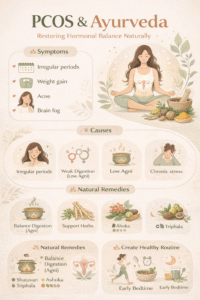
If you’ve been told you have PCOS, you’ll know the frustration all too well. The irregular periods. The unexplained weight changes. The acne that won’t quit. The brain fog. And perhaps worst of all – the feeling that conventional medicine has handed you a prescription and little else in the way of real answers.
At Keyajee, our ayurvedic doctor in London, Dr. Seema Datta, has spent over 25 years working with women navigating exactly this. And her approach to PCOS is fundamentally different – because Ayurveda doesn’t just manage symptoms. It asks why your body fell out of balance in the first place.

What Does Ayurveda Say About PCOS?
Polycystic Ovary Syndrome is one of the most common hormonal conditions affecting women of reproductive age in the UK. Yet despite how widespread it is, many women leave their GP appointments feeling confused and unsupported.
Ayurveda sees PCOS primarily as a Kapha-Vata imbalance, often aggravated by poor digestion, chronic stress, and a lifestyle that works against the body’s natural rhythms. When Agni – your digestive fire – is weak, toxins (called ama) accumulate in the body’s channels, disrupting hormonal flow and affecting the reproductive system.
This isn’t abstract philosophy. It maps directly onto what women with PCOS experience: sluggish metabolism, insulin resistance, irregular cycles, and fertility challenges. Ayurveda’s goal is to clear those blockages, restore balance, and help your body remember how to function as it should.
The Keyajee Approach: Personalised, Not Generic
One of the biggest misconceptions about Ayurveda is that there’s a single herbal formula for every condition. There isn’t – and there shouldn’t be.
At our ayurvedic clinic in London, every woman who comes to us with PCOS receives a comprehensive consultation first. Dr. Seema assesses your Prakriti (your unique constitution), your current Vikriti (state of imbalance), your stress levels, sleep quality, digestive health, and menstrual history before recommending anything.
From there, a personalised plan typically includes:
Herbal Support Herbs like Shatavari, Ashoka, and Lodhra are foundational to Ayurvedic care for hormonal imbalance. Triphala is commonly used to strengthen digestion and support the body’s natural detoxification. These aren’t quick fixes – they work gradually and deeply, and they’re always prescribed to suit your body, not a generic PCOS template.
Dietary Adjustments For women with PCOS, Ayurveda generally recommends warming, easily digestible foods that support Agni. If you’re curious about ayurvedic remedies for menstrual cramps or irregular cycles, much of the work actually begins at the dinner table – reducing processed foods, cold drinks, and excessive dairy while increasing warm cooked meals, spices like turmeric and ginger, and seasonal vegetables.
Lifestyle and Rhythm Ayurveda places enormous importance on dinacharya – daily routine. Something as simple as consistent meal times, an early bedtime, and gentle morning movement can have a measurable impact on cortisol levels and hormonal balance over time.
PCOS, Fertility, and What Comes Next
For many women, a PCOS diagnosis raises immediate concerns about fertility. And understandably so.
Ayurvedic fertility care at Keyajee takes a whole-body view. Rather than focusing exclusively on the ovaries, we look at the health of Artava dhatu – the reproductive tissue – and work to nourish it from the ground up. This includes addressing gut health, stress, sleep, and emotional wellbeing, all of which play a more significant role in fertility than most people realise.
If you’re in the early stages of thinking about conception, you may also find our work on ayurveda for pregnancy and childbirth preparation helpful. Many of the women we support begin their journey with us managing PCOS, and go on to have healthy, supported pregnancies – with Ayurvedic care continuing through each stage.
Beyond PCOS: A Whole-Life Approach to Women’s Health
Hormonal imbalance rarely exists in isolation. PCOS can affect women well into their 40s, sometimes transitioning into new challenges around perimenopause. At this stage, many women are looking for herbal menopause supplements that support their bodies without the side effects they’ve been trying to avoid their whole lives.
Ayurveda offers a coherent, continuous thread through all of these transitions – from managing a PCOS diagnosis in your 20s to navigating hormonal shifts in midlife, to supporting postpartum care and recovery after pregnancy. It’s a framework for the whole of a woman’s health, not just one chapter of it.
A Note on Patience and the Ayurvedic Process
One thing Dr. Seema always tells her patients: Ayurveda is not a shortcut. If you’ve been living with PCOS for years, the body needs time to rebalance and that’s actually a good thing. Unlike treatments that suppress symptoms, ayurveda works by genuinely restoring the conditions your body needs to heal itself.
Most women begin to notice meaningful changes within 8 to 12 weeks of consistent Ayurvedic care – better sleep, more regular cycles, reduced bloating, clearer skin, and a calmer relationship with their own body. The deeper hormonal shifts take longer, but they tend to last.
The women who see the best results are those who come to ayurveda not just as a treatment, but as a new way of understanding themselves – their rhythms, their constitution, and what their body is asking for.
If you’ve spent years feeling like your body is working against you, ayurveda offers something genuinely different: the idea that your body is always trying to find balance, and that with the right support, it can.
Keyajee Ayurvedic Clinic has been supporting women’s health in London since 2008. All treatments are prescribed by qualified Ayurvedic practitioners and tailored to your individual constitution and needs.
FAQs
Q1. Can Ayurveda cure PCOS permanently?
Ayurveda cannot “cure” PCOS, but it can restore hormonal balance so effectively that many women see their symptoms significantly reduce or disappear over time.
Q2. How long does Ayurvedic treatment for PCOS take to show results?
Most women notice meaningful improvements – better cycles, clearer skin, reduced bloating – within 8 to 12 weeks of consistent treatment.
Q3. Can I follow Ayurvedic treatment alongside my existing medication?
Yes , Ayurveda works well alongside conventional medicine, but always inform both your GP and your Ayurvedic practitioner about everything you’re taking.
Q4. Is Ayurvedic treatment for PCOS suitable if I’m trying to conceive?
Absolutely , supporting fertility is actually one of the core focuses of Ayurvedic PCOS care, as restoring hormonal balance naturally improves conception conditions.
Q5. Do I need to visit the clinic in person or can I consult online?
Keyajee offers both in-person appointments at the London clinic and full online consultations, so support is accessible wherever you are in the UK.


